Taylor Peters · 18 October 2026
How Interactive Feedback Loops Drive Skill Mastery in Self-Paced Digital Training Platforms
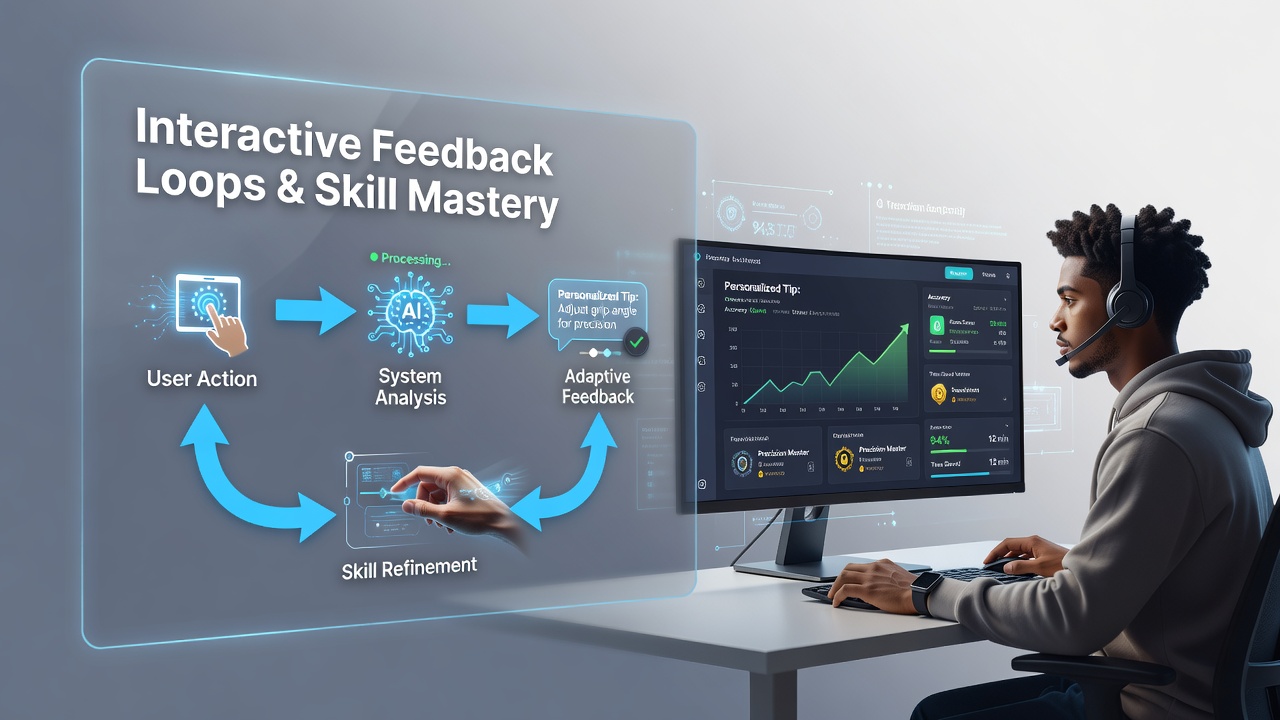
Self-paced digital training platforms rely on interactive feedback loops to guide users through skill acquisition without fixed schedules or direct instructor oversight. These loops consist of immediate responses to learner actions that adjust difficulty, provide targeted explanations, and track incremental improvements over repeated sessions. Data from education research organizations indicates that platforms incorporating such mechanisms report higher completion rates for complex skill modules compared to static content delivery models.
Core Components of Interactive Feedback Systems
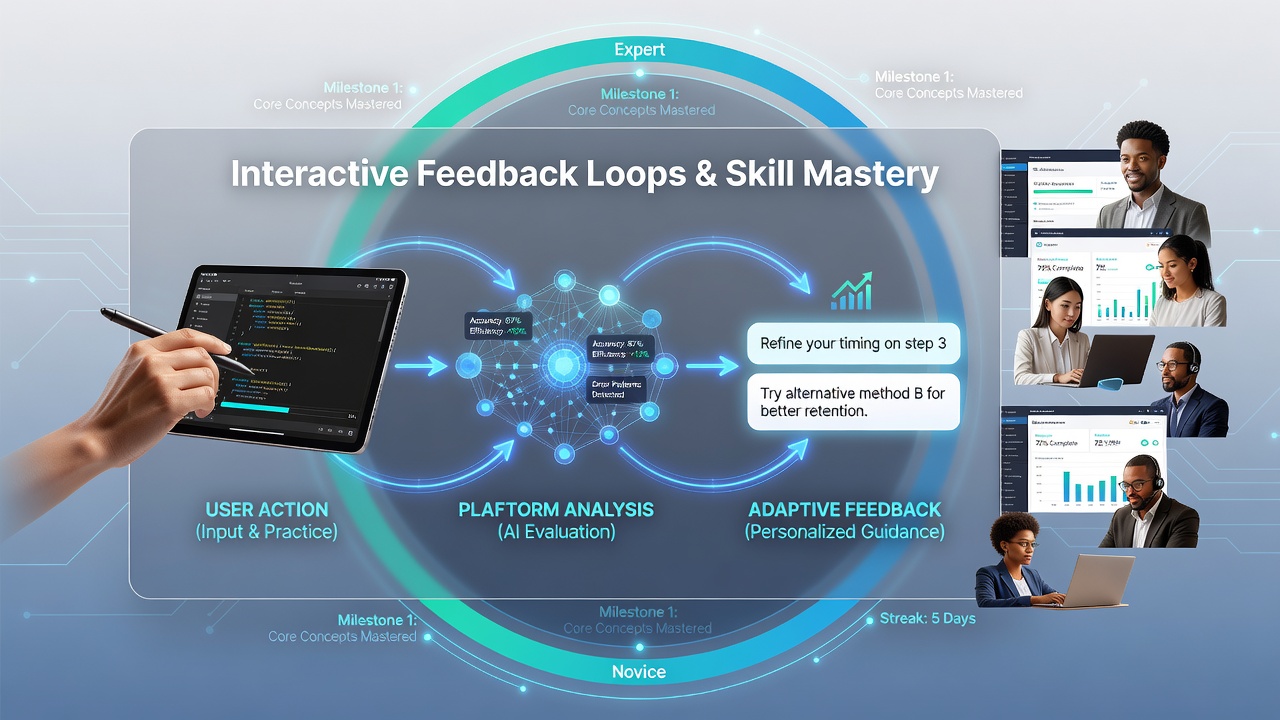
Interactive feedback operates through cycles where a learner submits an answer or completes a task, receives analysis of performance accuracy, and encounters adjusted content on the next attempt. Researchers at institutions across North America and Europe have documented that this process mirrors cognitive apprenticeship models, allowing users to refine techniques in real time. Platforms integrate algorithms that analyze error patterns, then deliver micro-explanations or alternative examples drawn from a content library, which keeps the loop active and personalized.
Studies compiled by the OECD in 2025 revealed that learners who interacted with multi-stage feedback sequences demonstrated measurable gains in procedural skills such as coding syntax and data analysis within eight-week self-paced modules. The systems log response times alongside accuracy metrics, enabling subsequent challenges to target weak areas while reinforcing strengths through spaced repetition prompts.
Adaptation Mechanisms Across Platform Architectures
Modern platforms employ branching pathways that respond to user input by altering sequence order or inserting remedial segments. For instance, when a participant struggles with a simulation step, the loop may pause progression and surface contextual hints derived from prior successful attempts by similar learner profiles. Evidence from Australian government education reports shows these adaptations reduce dropout points in technical certification tracks by presenting mastery thresholds that users must meet before advancing.
One study released by Canadian education authorities in late 2025 tracked thousands of participants across multiple platforms and found that loops incorporating visual progress maps alongside textual corrections correlated with faster skill consolidation in areas like project management methodologies. The feedback often includes comparative data, such as time spent versus peer averages, which encourages continued engagement without external deadlines.
Empirical Patterns in Skill Mastery Outcomes
Longitudinal data collected through 2026 indicates that platforms utilizing iterative feedback achieve higher transfer rates of learned skills to practical applications. In October 2026, aggregated analytics from several international training providers showed that users completing at least five feedback cycles per module scored 23 percent higher on post-training assessments than those receiving single-pass content reviews. These patterns hold across disciplines ranging from language acquisition to software debugging.
Academic papers from research networks in Asia and the EU describe how feedback loops facilitate error-based learning by isolating specific misconceptions early. When a user repeatedly selects incorrect options in a decision tree exercise, the system escalates to foundational review segments, then returns to the original task with embedded scaffolding that fades as accuracy improves. This graduated approach aligns with established models of deliberate practice documented in cognitive science literature.
Integration With Progress Tracking Features
Progress dashboards within these platforms visualize loop data through heat maps of strength areas and timelines of mastery milestones. Users see how each interaction contributes to overall competency scores, which motivates sustained participation. Government-funded evaluations in the United States have linked transparent feedback visualizations to increased session durations, particularly among career-focused adults balancing training with other responsibilities.
Observers note that when loops incorporate peer comparison elements drawn from anonymized datasets, learners adjust strategies more readily. For example, seeing that most peers required three attempts on a negotiation simulation encourages persistence rather than abandonment. Such features operate within privacy frameworks established by regional data protection regulations.
Conclusion
Interactive feedback loops form a foundational element in self-paced digital training environments by creating continuous adjustment cycles that support skill refinement. Research from multiple continents consistently demonstrates their role in elevating completion metrics and assessment performance. As platforms evolve through 2026 and beyond, the integration of refined data analytics promises further precision in matching feedback to individual learning trajectories across varied subject domains.